
Celtic’s Wage Structure Under the Spotlight as Club-Record Signing Kasper Høgh Ushers in a New Era
Celtic’s player wage structure has become a major talking point following the club’s ambitious summer recruitment, with the arrival of Kasper Høgh signalling another statement of intent from the Scottish champions. The Danish striker completed an £11 million move from Norwegian side Bodø/Glimt, becoming Celtic’s record signing and the player expected to lead the line as the club’s new first-choice number nine.
Although Celtic traditionally keep the salaries of individual players private, the transfer has inevitably sparked discussions over where Høgh fits into the club’s wage hierarchy. Before making the switch to Glasgow, the striker was reportedly earning around £41,000 per month at Bodø/Glimt. While his exact salary at Celtic has not been disclosed, widespread expectations are that he has received a significantly improved contract that reflects both his record transfer fee and his importance to the club’s long-term plans. Reports and speculation suggest he could now be among, if not the highest-paid player at Celtic, although the club has not confirmed his earnings.
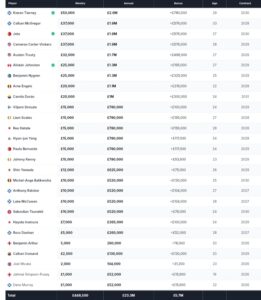
At present, Kieran Tierney sits among Celtic’s highest earners on a reported £50,000 per week, underlining his importance following his return to the club. Club captain Callum McGregor also remains one of the leading figures in the wage structure, earning approximately £37,000 per week, matching the reported salaries of attacking star Jota and defensive mainstay Cameron Carter-Vickers. Their contracts reflect the influence they continue to have both on and off the pitch as Celtic pursue domestic success while aiming to make a stronger impact in European competition.
Behind that group is Auston Trusty, whose reported wage of £32,000 per week highlights the club’s commitment to strengthening the defensive unit with experienced quality. The American international has become an important member of the squad, and his salary places him comfortably among the club’s better-paid players.
The next tier includes several players viewed as key parts of Celtic’s future. Alistair Johnston and Benjamin Nygren are both reported to earn £25,000 per week, rewarding their consistent contributions and growing influence within the squad. Midfielder Arne Engels and attacker Camilo Durán reportedly receive £20,000 per week, reflecting Celtic’s confidence in their long-term development while maintaining a balanced wage model.
Further down the salary scale, Reo Hatate and Liam Scales are each reported to earn £15,000 per week. Both players continue to play valuable roles within the first-team squad despite earning considerably less than some of their senior teammates. Their salaries demonstrate Celtic’s ability to maintain financial discipline while still rewarding players based on their experience, contribution and contractual situations.
The arrival of Kasper Høgh could, however, reshape that hierarchy. As a club-record acquisition, expectations surrounding the striker are understandably enormous. Celtic have invested heavily not only in the transfer fee but almost certainly in the financial package needed to persuade him to leave Bodø/Glimt and continue his career in Scotland. While no official figures have emerged regarding his weekly wage, it would not be surprising if his contract places him alongside—or even above—the club’s current top earners.
That level of investment also brings increased responsibility. Høgh is expected to become Celtic’s primary goalscorer and focal point in attack, replacing the need for a rotating striker system and providing the clinical finishing supporters have been eager to see. His physical presence, movement inside the penalty area and proven goalscoring record in Norway convinced Celtic that he was worth breaking their transfer record for.
The wage structure also illustrates how carefully Celtic continue to manage their finances. Unlike many clubs that dramatically inflate salaries following major signings, Celtic have generally maintained a sustainable model that rewards performance while protecting the club’s long-term financial stability. Even with a record signing arriving, the expectation is that Høgh’s contract has been structured responsibly despite representing a significant increase from his previous reported earnings of £41,000 per month.
For supporters, the focus will ultimately be on performances rather than pay packets. A record transfer fee naturally creates heightened expectations, and Høgh will be judged by the number of goals he scores, the trophies he helps deliver and his impact in European competition. If he can justify Celtic’s investment, few fans will question where he sits within the club’s wage rankings.
As the new season approaches, Celtic appear to have assembled a squad that combines established leaders, emerging talents and marquee additions. Players such as Tierney, McGregor, Jota and Cameron Carter-Vickers continue to provide the backbone of the team, while younger stars like Engels, Nygren and Durán represent the club’s future. Now, with Kasper Høgh arriving as the headline signing of the summer, Celtic have added another major piece to Brendan Rodgers’ squad.
Although the exact details of Høgh’s salary remain undisclosed, one thing is clear: Celtic’s record investment demonstrates the club’s determination to remain dominant domestically while raising their competitiveness on the European stage. If the Danish striker lives up to expectations, both his transfer fee and his expected place among Celtic’s highest earners will quickly be viewed as money well spent.