
Sunderland Question VAR Credibility After Premier League Apology Over Disallowed Goal Controversy
Serious questions have been raised over the credibility of VAR following a controversial decision involving Dan Ballard during Sunderland AFC’s heavy defeat to Nottingham Forest. The incident, which saw Ballard’s goal ruled out after a VAR intervention, has now taken a dramatic turn after the Premier League released official audio and issued an apology.
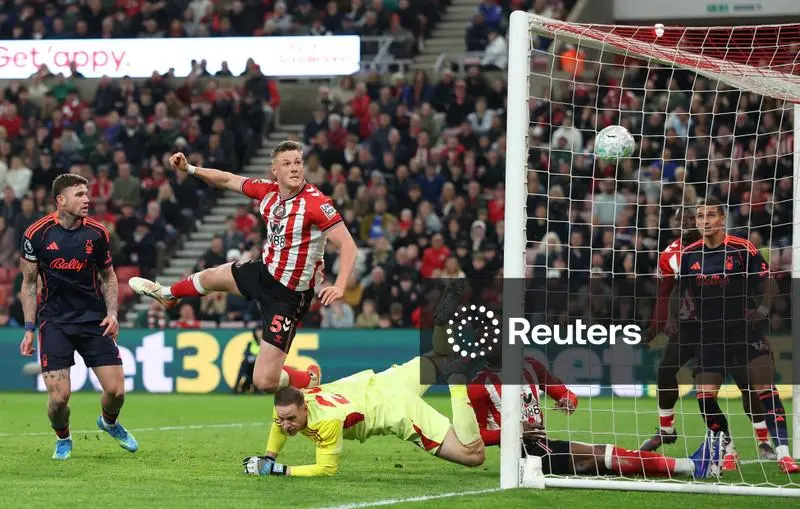
The flashpoint moment came midway through the match when Ballard reacted quickest inside the penalty area to convert what initially appeared to be a legitimate goal. The referee awarded the strike on the field, sparking brief celebrations among Sunderland players and supporters. However, the decision was swiftly reviewed by VAR, leading to a reversal that stunned everyone connected to the club.
According to the VAR officials, the goal was disallowed due to a foul on Forest goalkeeper Matz Sels in the buildup. The ruling suggested that there was sufficient contact to impede the goalkeeper’s ability to make a save. Yet, the decision immediately sparked debate, with many arguing that the contact was minimal and typical of physical play in crowded penalty-box situations.
The controversy intensified when the Premier League released the VAR audio from the incident. The recording, intended to promote transparency, instead appeared to fuel further criticism. In the audio, officials can be heard deliberating over the level of contact and whether it constituted a clear and obvious error — the standard threshold required for VAR intervention.
What has particularly frustrated Sunderland is the perceived inconsistency in the interpretation of such incidents. Club officials and fans alike have questioned why similar levels of contact in other matches have not resulted in goals being overturned. The audio has been described by some analysts as “inconclusive” and lacking the decisive clarity expected in such a high-stakes decision.
In response to the growing backlash, the Premier League acknowledged shortcomings in the decision-making process and issued an apology to Sunderland. While the statement stopped short of overturning the result, it admitted that the VAR intervention may not have met the required standard for clear and obvious errors.
This admission has done little to ease tensions. Instead, it has reignited broader concerns about the reliability and consistency of VAR in English football. For Sunderland, the disallowed goal represented more than just a missed scoring opportunity — it was a moment that could have shifted momentum in a match that ultimately ended in a damaging defeat.
From a technical standpoint, the incident highlights ongoing challenges in VAR implementation, particularly around subjective decisions such as fouls. Unlike objective calls like offsides, these judgments rely heavily on interpretation, leaving room for inconsistency even with technological assistance.
As scrutiny intensifies, pressure is mounting on the Premier League to refine VAR protocols and ensure greater accountability. For Sunderland, however, the damage has already been done — both on the scoreboard and in their trust in the system.
The Ballard incident may now serve as yet another case study in the evolving debate over VAR, raising a fundamental question: is the technology enhancing fairness, or simply adding another layer of controversy to the modern game?