
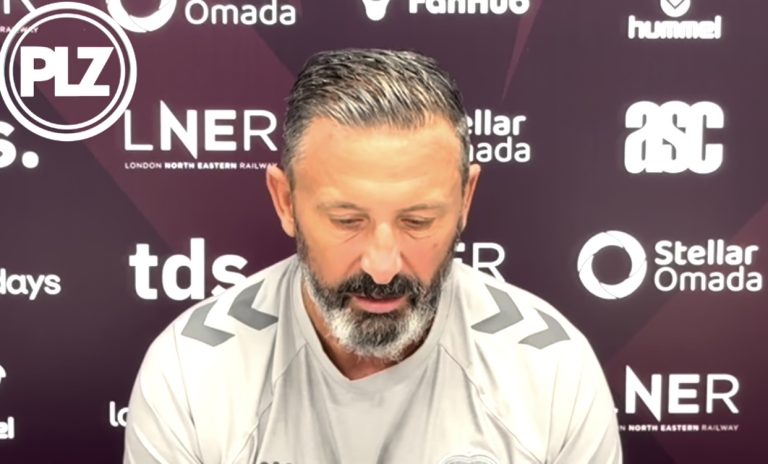
Scottish football was plunged into controversy on the eve of a massive Premiership showdown after Hearts head coach Derek McInnes launched a sensational attack on Celtic during an explosive 12-minute press conference that has sent shockwaves across the country.
In a fiery 12-minute address that left journalists stunned and social media ablaze, McInnes accused Celtic of being “Scottish football robbers,” a phrase that has since gone viral and sent shockwaves through the Premiership. The Hearts boss pulled no punches as he questioned the balance of power in the league, the influence wielded by Glasgow’s dominant force, and what he described as “a system that protects the same clubs over and over again.”
Speaking with visible frustration, McInnes said:
“Everyone knows what happens in this league. The rules don’t apply equally. Some clubs are punished for breathing, while others can do what they like. That’s not competition that’s robbery. And everyone in Scottish football sees it.”
The comments immediately sparked outrage among Celtic supporters, many of whom flooded social media to defend their club’s success, while others admitted the timing and intensity of the remarks were impossible to ignore. Within minutes, clips of the press conference were trending across X, Facebook, and TikTok, with fans and pundits split sharply down the middle.
McInnes went further, suggesting that smaller clubs are routinely disadvantaged both on and off the pitch. Without directly naming officials or governing bodies, his implication was clear: Celtic’s dominance, he claimed, is not built on footballing excellence alone.
“We’re told to compete, to believe, to dream,” he continued. “But when decisions keep going one way, when finances keep flowing one direction, and when questions are never answered, what chance does the rest of the league really have? But recently we are use to their tricks, we would never allow them”
The Hearts manager insisted his words were not designed to distract from the match, but rather to “finally say what everyone whispers behind closed doors.” He added that Tynecastle Park would be “a fortress of honesty” on matchday, urging his players and supporters to channel the anger into performance.
Celtic, for their part, declined to respond directly to McInnes’ comments.
A brief club statement focused solely on football matters, stating they were “fully concentrated on the upcoming fixture” and had “no interest in engaging with external noise.” Privately, however, sources suggest the comments have not gone unnoticed within the Celtic camp.
Former players and pundits were quick to weigh in. Some praised McInnes for his bravery, calling the rant “long overdue,” while others accused him of inflaming tensions and risking disciplinary action. One former international described it as “a calculated explosion emotional, yes, but not accidental.”
Meanwhile, Hearts supporters have rallied behind their manager, with many praising him for “standing up for the rest of Scottish football.” Tickets for the match at Tynecastle Park sold out within hours of the press conference, with expectations now sky-high for a volatile and unforgettable encounter.
The timing could not be more dramatic. Celtic arrive in Edinburgh chasing crucial points in the title race, while Hearts see the fixture as an opportunity to make a statement both on the scoreboard and in the wider conversation about the league’s future.
As kickoff approaches, one thing is certain: this is no longer just another Premiership match. McInnes has turned it into a referendum on power, fairness, and the soul of Scottish football itself.
Whether his words prove prophetic or reckless will be decided under the floodlights at Tynecastle Park. But win or lose, Derek McInnes has already ensured this Celtic clash will be remembered long after the final whistle.