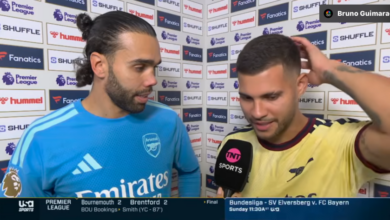
Heated Live-TV Exchange Leaves Celtic Supporters Talking
A heated moment during a live football broadcast has sparked widespread discussion after a former Scottish football figure appeared to react furiously to comments surrounding Celtic and its supporters. What began as a television discussion quickly became an intense exchange, with the reaction drawing attention from viewers who felt the remarks had crossed a line.
The incident has particularly attracted interest because of the strong emotions traditionally associated with Celtic, a club whose supporters have a passionate and deeply invested relationship with their team. Any criticism directed towards the club or its fanbase can therefore generate a significant response, especially when such comments are made during a live broadcast.
According to the information surrounding the incident, Chris Boyd was visibly unhappy with what had been said. His reaction was described as furious, with the former footballer making his feelings clear rather than allowing the comments to pass without challenge. The intensity of his response immediately became one of the main talking points among those who witnessed the exchange.
The controversy reportedly centred on a comment that many viewers regarded as “reckless and disrespectful” towards Celtic and its supporters. While football punditry frequently involves strong opinions, criticism and disagreement, there is often a fine line between offering a footballing assessment and making remarks that supporters believe unfairly target the identity and character of a club’s fanbase.
That distinction appeared to be at the heart of the reaction. Chris Boyd’s response suggested that he considered the comment serious enough to deserve a strong rebuttal. Rather than simply disagreeing on the footballing merits of the discussion, his reaction carried a much greater sense of frustration, creating a moment that immediately stood out from the wider broadcast.
Live television can amplify moments of disagreement because there is little opportunity to pause, reconsider or carefully reshape a response. When strong personalities are involved, a simple difference of opinion can quickly develop into a memorable exchange. That appeared to be the case here, with the reaction becoming a major talking point among football fans.
The involvement of Kris Boyd added another layer to the discussion. The names Chris Boyd and Kris Boyd have understandably drawn attention, particularly because of the intensity of the reaction described in connection with the comments about Celtic. For viewers, the exchange demonstrated just how quickly football debates can become personal and emotionally charged when the subject involves one of Scotland’s biggest clubs.
Celtic supporters, in particular, are likely to view the incident through the broader context of the constant debate surrounding their club. Celtic commands a huge following, and its supporters are accustomed to seeing their club discussed across television, radio and social media. Strong criticism is nothing new, but the manner in which that criticism is delivered can often determine whether it becomes another ordinary football debate or a much bigger controversy.
The reaction also highlights the enduring influence of former players and pundits in Scottish football coverage. Their opinions can carry considerable weight because they speak from experience of the game, but their comments can also provoke strong reactions when supporters feel that their club has been unfairly represented.
Ultimately, the incident has become another example of the passion surrounding Scottish football. A single comment was enough to trigger a visibly emotional response, turning an ordinary broadcast discussion into a moment that caught the attention of viewers. Whether fans agree with Chris Boyd’s reaction or believe he went too far, there is little doubt that the exchange generated the kind of drama that keeps football discussion alive long after the final whistle.
For Celtic supporters, the controversy is likely to continue to fuel debate, particularly over where the boundary should be drawn between legitimate criticism and disrespect. For the wider football audience, meanwhile, the incident serves as a reminder that television punditry can sometimes produce moments just as dramatic and unpredictable as the matches being discussed.