NEWCASTLE FANS IN TOTAL DISBELIEF AS KIERAN TRIPPIER SENDS 13 BLUNT MESSAGES TO EDDIE HOWE FOLLOWING HIS NEWCASTLE EXIT – HE DIDN’T HOLD BACK

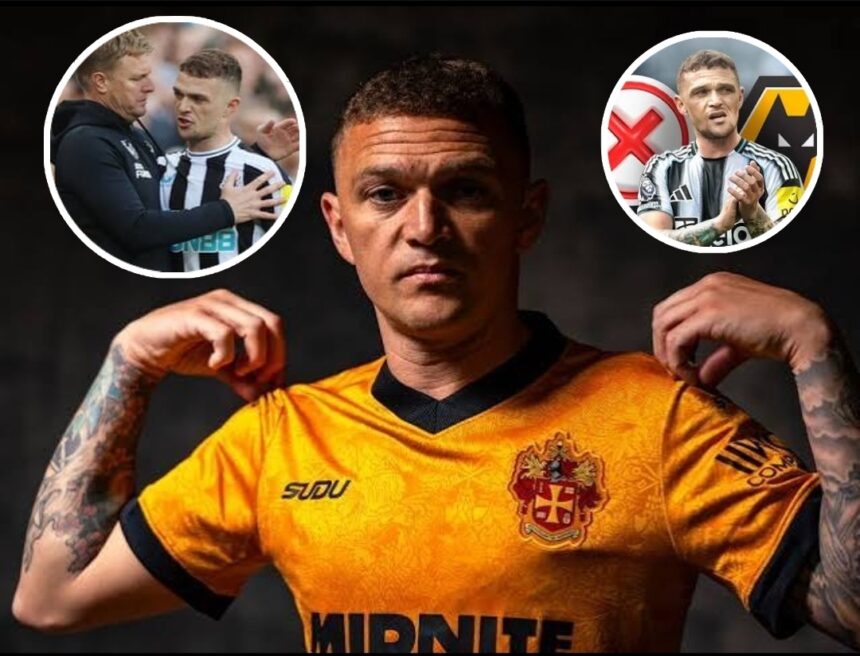
n the swirling world of modern football rumour and social media amplification, few stories travel faster than those that promise conflict between a departing club legend and the manager who helped define an era. For Newcastle United supporters, the summer of 2026 has already delivered more than enough emotional turbulence.
The departure of Kieran Trippier at the end of his contract, followed weeks later by Eddie Howe’s own decision to step down, has left many fans processing a rapid changing of the guard at St James’ Park. Into that atmosphere has crept a particularly potent claim: that Trippier, after leaving the club, sent a series of 13 blunt messages to Howe, messages in which he “didn’t hold back.”
The suggestion has sparked widespread discussion and a sense of disbelief among sections of the support. Yet when the documented record is examined carefully, the narrative of confrontation does not hold. What exists instead is a consistent pattern of mutual respect, gratitude, and recognition of shared achievement.
To understand why the idea of blunt messages resonates so strongly with some, it is necessary to return to the beginning of Trippier’s Newcastle story. In January 2022 the Magpies sat in the Premier League relegation zone. The Saudi-led takeover had only recently been completed, and the club was still finding its feet under the new ownership. Eddie Howe, newly appointed and still building his methods, needed experienced, high-character players who could stabilise a squad that had been drifting.
Trippier, then at Atlético Madrid under Diego Simeone and a recent La Liga title winner, became the first major signing of the new era. The move surprised many. Leaving a successful Spanish side for a team fighting to stay in the Premier League carried risk. Yet Trippier chose the challenge. From the first days he made an impact that went far beyond set-piece delivery and defensive solidity.
Howe has repeatedly recalled one of the earliest moments that defined Trippier’s influence. In a dressing room still adjusting to new ownership, new expectations and the pressure of a relegation battle, the newly arrived right-back stood up and delivered a speech of real leadership and strength. Howe later described the impression it left: powerful, positive, and a clear signal that standards were about to change. That speech, delivered while the training ground and the squad still carried the residue of previous seasons, became a reference point for the years that followed.
Trippier did not simply arrive and play; he helped reshape the mentality of the group. Over the subsequent seasons that mentality produced tangible results: two qualifications for the UEFA Champions League and, in 2025, the club’s first major domestic trophy in seventy years when Newcastle defeated Liverpool in the Carabao Cup final at Wembley. Trippier played the full ninety minutes that day and contributed to the decisive moments that ended the long wait.
By the time the 2025-26 season began to unfold, Trippier was 35 and entering the latter stage of his playing career. His appearances remained valuable, his leadership still central, yet the broader picture at the club was becoming more complex. Results fluctuated. European qualification proved elusive. Key players began to attract attention from elsewhere.
In early April 2026 the club and the player jointly confirmed that Trippier would leave when his contract expired at the end of the season. The announcement was handled with dignity on both sides. Trippier’s public statement struck a tone of genuine emotion rather than residual grievance.
“The time has come to leave this amazing club after four-and-a-half years,” he said. “This is where I have felt most at home. It’s emotional, and I’m really going to miss it. I want to say a massive thank you to the supporters for all the support through the good and the bad times for me personally. You’ve always supported me, always stood by me.
To my team-mates, it’s going to be emotional. It’s been an amazing journey with you guys. I’m going to miss you all, but to win a trophy with you guys was really, really special – the best of my career. And to the manager, Eddie Howe, all the coaching staff and the team behind the scenes, a massive thank you.
The gaffer had the trust – twice – to sign me, gave me the opportunity to represent and captain this great club and most importantly, we managed to win a trophy. I’m going to miss everyone at the club. Thank you.”
The reference to “twice” acknowledged their earlier working relationship at Burnley. There was no bitterness in the wording, no suggestion of unresolved issues. Howe responded in kind. He described Trippier as magnificent on and off the pitch, a player who from the moment he walked through the door had helped drive the standards that changed the club’s trajectory.
Performances had been of the highest level. Leadership skills had proved invaluable in difficult moments. Experience had a calming effect, while the drive and will to win inspired those around him. Howe made clear that although the club would be saying goodbye, a player of Trippier’s character would give everything to finish the season on a high.
A short time later Howe provided further detail about the private conversation that preceded the public announcement. Trippier had come to see him. He had a clear vision of what he saw his future looking like. The club respected that vision and wanted him to receive the best possible reception and reaction for his time at the club.
For Howe, Trippier ranked among the best players he had coached. Consistency, the will to win, and genuine leadership qualities were the hallmarks. Those comments, delivered during the international break, left little room for interpretation. The relationship between player and manager remained one of professional regard.
Trippier continued to feature as the season wound down. He reiterated his commitment publicly, insisting supporters would receive 100 percent from him until the final match. He spoke of remaining attached to Newcastle, of following the club and the manager after he left, and of returning whenever possible to watch games and support the players.
His final home appearance against West Ham United became a proper send-off. Fans produced displays and banners. A lap of honour followed. The occasion was emotional rather than acrimonious. After the last game of the campaign away at Fulham, Trippier posted a further farewell on social media. He reflected on walking through the doors for the first time and immediately recognising that the club was special. Wearing the black and white, leading the team, and playing in front of the St James’ Park crowd were experiences he would carry forever. Memorable Champions League nights, the Carabao Cup triumph, and the honour of the captain’s armband all featured. He thanked staff, teammates and supporters for trusting him, pushing him and standing by him. Newcastle, he concluded, would always have a place in his heart.
These are the messages that exist in the public domain. They are consistent across weeks and months. They contain gratitude, reflection and affection. They do not contain the 13 blunt communications that some online discussions have alleged. No credible report from reputable sources has produced evidence of such a series of private messages, nor of any sudden deterioration in the relationship after the formal exit. The claim appears to have grown from the broader sense of upheaval that followed the end of the season rather than from verified correspondence.
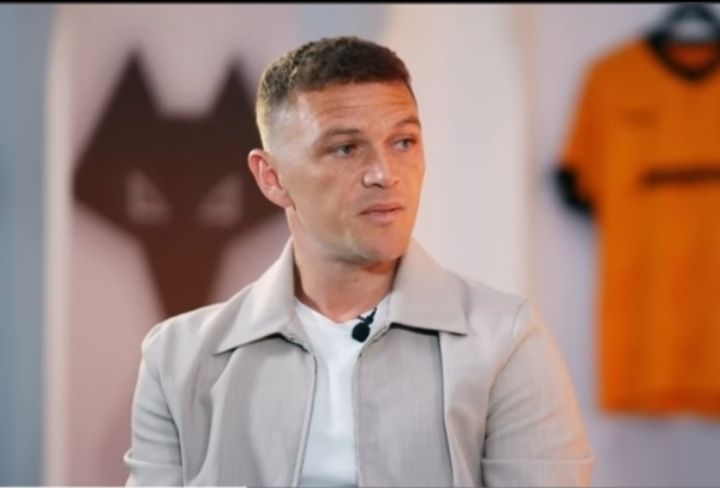
By early June 2026 Trippier’s next destination had become clearer. Wolverhampton Wanderers, recently relegated to the Championship, agreed a free transfer. The move offered regular football and a new project aimed at an immediate return to the Premier League. Trippier underwent a medical and signed a two-year deal with the option of a further year. For a player of his experience the Championship represented a different challenge, yet one he approached with the same professionalism that had marked his time on Tyneside. Later comments from the player emphasised hunger for success and a desire to help the club regain its place among the elite. There was no public revisiting of Newcastle affairs in negative terms.
While Trippier settled into his new environment, Newcastle continued to evolve. The summer transfer window brought further departures and limited high-profile arrivals. Results in pre-season and the wider context of the previous campaign contributed to a period of reflection at board and coaching level.
In late July 2026 Eddie Howe informed the club of his decision to step down as head coach after nearly five years. His own statement spoke of personal reflection, of having given life, heart and soul to the role with unrelenting energy, and of the belief that stepping away was in the best interests of both himself and the club. He expressed enduring affinity and love for Newcastle United and wished the club every success. The club accepted the decision with gratitude for his extraordinary contribution. Talk of a successor began almost immediately.
The coincidence of Trippier’s exit and Howe’s later departure has inevitably invited narrative construction. Supporters who lived through the relegation fight of early 2022, the subsequent climb, the European nights and the Wembley victory understandably feel the loss of both men keenly. Trippier’s leadership group presence and Howe’s tactical and cultural imprint were intertwined for much of the modern renaissance. When both leave within a relatively short window, speculation fills the space.
The idea of blunt messages from the departing full-back to the manager offers a dramatic explanation for the sense of an era ending. Yet the available evidence points in the opposite direction. The private meeting was respectful. The public statements were warm. The farewell at St James’ Park was affectionate. The subsequent career move was handled without public recrimination.
Trippier’s Newcastle legacy rests on more than statistics, though the numbers are impressive: more than 150 appearances, important goals and assists, consistent availability when fit, and a central role in ending a seventy-year wait for major silverware. It rests equally on the intangible qualities Howe highlighted: the first speech that set a tone, the daily standards in training, the ability to calm and drive teammates in equal measure, and the decision to join a club in difficulty rather than remain in comfort. Those qualities explain why fans felt the departure so sharply. They also explain why the relationship with the manager who brought him in remained positive until the end.
Football careers are finite. Contracts expire. Players move. Managers eventually step away. The summer of 2026 has underlined those realities for Newcastle United. Kieran Trippier left with his head held high and with public words of thanks directed at the manager, the staff, the teammates and the supporters.
Eddie Howe later left after a period of reflection of his own. The documented exchanges between the two men contain none of the 13 blunt messages that have been claimed. What they contain is recognition of a successful partnership that helped transform a club. For Newcastle fans still absorbing the scale of change, that recognition may ultimately prove more enduring than any rumour of private discord. The black and white connection Trippier described continues. The standards he helped embed remain part of the club’s recent history. And the mutual respect that characterised his exit stands as the factual record against which dramatic claims must be measured.