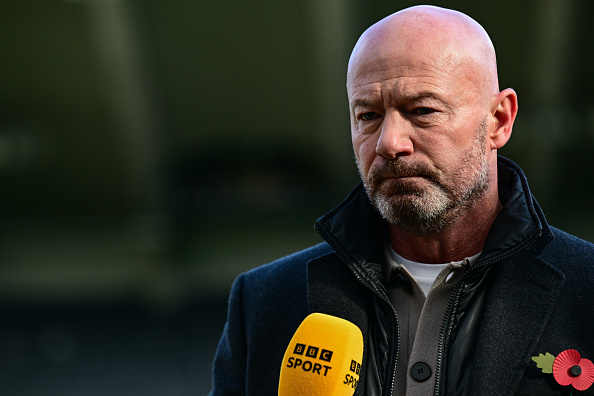
Thomas Tuchel’s Decision To Leave Lewis Hall Out Raises Questions About England’s Tactical Direction


Thomas Tuchel’s Decision To Leave Lewis Hall Out Raises Questions About England’s Tactical Direction
The absence of Lewis Hall from the latest England national football team discussions under new manager Thomas Tuchel has become one of the most debated selection issues surrounding the national side in recent weeks.
Hall’s performances for Newcastle United throughout the season positioned him as one of the most promising young defenders in English football. Comfortable in possession, tactically flexible, and increasingly reliable defensively, the 21-year-old appeared to fit the profile of a modern international full-back.
Yet despite his development, reports from within England circles suggest Tuchel remains unconvinced about Hall’s suitability for tournament football at this stage of his career. According to insiders, the England manager is believed to favour players with clearly defined tactical identities rather than adaptable “hybrid” footballers capable of covering several roles.
The decision has divided opinion sharply across English football. While some analysts understand Tuchel’s preference for tactical clarity and defensive structure, others view Hall’s omission as a missed opportunity to integrate one of the country’s brightest emerging talents ahead of a major tournament cycle.
With England entering a new era under Tuchel, the debate surrounding Hall’s exclusion offers an early glimpse into the tactical philosophy likely to shape the national team moving forward.
⸻
Lewis Hall’s Rise At Newcastle United
Hall’s development over the last two seasons has been significant.
After initially emerging through the academy system at Chelsea, the defender gradually established himself as a valuable asset following his move to Newcastle. Under Eddie Howe, Hall evolved from an energetic young prospect into a tactically intelligent defender capable of operating in multiple systems.
Throughout the campaign, Hall featured primarily at left-back but frequently drifted into midfield areas during Newcastle’s build-up phases. His technical comfort under pressure and ability to progress possession became increasingly important for Howe’s side, particularly against teams pressing aggressively in central areas.
Several underlying metrics highlighted his improvement:
* High progressive passing numbers among Premier League full-backs
* Strong ball recovery statistics in transitional phases
* Consistent involvement in chance-creating sequences
* Improved one-versus-one defensive success rate
Most notably, Hall demonstrated maturity in high-pressure fixtures against elite opposition. Rather than appearing overwhelmed, he often looked composed and tactically disciplined despite Newcastle dealing with injuries and squad rotation throughout the season.
Those performances naturally led many supporters and analysts to expect greater involvement with England.
Instead, Tuchel’s apparent hesitation has become one of the earliest talking points of his tenure.
⸻
Why Thomas Tuchel May Have Concerns
According to reports from individuals close to England’s setup, Tuchel’s reservations are believed to centre around positional specialisation.
Hall’s versatility has traditionally been viewed positively. He can operate as a traditional full-back, an inverted full-back stepping into midfield, a wing-back, or even as a deeper midfielder in possession-heavy systems.
However, Tuchel’s managerial history suggests he often prioritises clearly structured tactical roles over fluid positional interpretation.
At clubs such as Paris Saint-Germain, Bayern Munich, and Chelsea, Tuchel frequently demanded highly specific movement patterns from his defenders. His systems rely heavily on positional discipline, defensive compactness, and controlled transitions.
In that context, Hall’s instinctive style may present tactical questions.
While Hall excels when given freedom to drift inside and contribute creatively, Tuchel may prefer defenders who remain more rigid within structured defensive lines during tournament football, where mistakes are often magnified.
The concern reportedly is not about Hall’s talent level.
Instead, it appears to centre on whether he has fully mastered one elite role suitable for knockout football against world-class opposition.
That distinction is important because it reflects a broader philosophical divide within modern football coaching.
⸻
The Modern Full-Back Debate
Hall’s situation reflects one of football’s most interesting tactical discussions: should elite full-backs be specialists or multifunctional players?
Over the last decade, the role of full-backs has transformed dramatically. Managers increasingly use wide defenders as playmakers, auxiliary midfielders, and pressing outlets rather than purely defensive figures.
Examples across European football include:
* Inverted full-backs stepping into midfield
* Wing-backs acting as primary creators
* Defenders operating asymmetrically depending on possession structure
Hall fits naturally within that modern profile.
His intelligence in possession and ability to rotate positions fluidly align with many contemporary tactical trends seen throughout the Premier League.
However, international football remains slightly different from club football.
Managers have limited preparation time, fewer training sessions, and less tactical continuity compared to club environments. As a result, many international coaches prioritise simplicity, structure, and reliability over tactical experimentation.
Tuchel may therefore believe Hall requires further development before being trusted within a tightly controlled international system.
Whether supporters agree with that assessment is another matter entirely.
⸻
Fan Reaction Across England
Reaction from supporters has been intense, particularly among Newcastle fans.
Many supporters view Hall as one of the club’s standout young performers and believe his omission reflects an overly cautious approach from England’s new manager.
Online discussions have focused heavily on Hall’s adaptability, with many arguing that versatility should be considered a major strength rather than a tactical concern.
One supporter wrote:
“England have spent years lacking technically secure defenders and now one emerges, he gets overlooked.”
Another added:
“Lewis Hall has shown more composure this season than some established internationals.”
There has also been frustration surrounding England’s long-term planning. Several fans believe integrating younger players earlier is essential if England hope to build sustained success over multiple tournaments.
At the same time, some observers have defended Tuchel’s approach.
Supporters of the manager argue that tournament football requires clarity and tactical discipline above all else. They point to Tuchel’s success in knockout competitions, including winning the UEFA Champions League with Chelsea, as evidence that his structured tactical systems can succeed at the highest level.
The division in opinion illustrates how closely England’s tactical direction will be scrutinised under the German coach.
⸻
What Hall Offers England Tactically
From a purely footballing perspective, Hall provides several qualities England do not possess in abundance.
Progressive Ball Carrying
Hall is comfortable driving into midfield under pressure, helping teams bypass aggressive presses. That ability can be crucial in tournament football where controlling momentum often determines outcomes.
Positional Flexibility
He can operate in multiple defensive structures:
* Back four as a conventional left-back
* Back five as a wing-back
* Inverted role moving centrally during possession
That flexibility could prove valuable during tournaments involving different opponents and tactical demands.
Energy And Recovery Pace
Hall covers ground effectively and recovers quickly in transition, an increasingly important trait against elite counter-attacking teams.
Technical Security
Perhaps most importantly, he rarely appears rushed in possession. England have historically struggled against teams capable of pressing aggressively, and Hall’s composure could help solve those issues.
Still, Tuchel may prioritise defensive certainty over developmental potential in the short term.
⸻
The Pressure On Tuchel’s Early Decisions
Every England manager faces intense scrutiny over squad selections, but Tuchel enters the role carrying particularly high expectations.
England possess one of the deepest talent pools in Europe, meaning omissions will inevitably become major talking points.
Hall’s exclusion matters because it is not simply about one player.
Instead, it offers insight into the type of national team Tuchel intends to build.
Will England become more tactically rigid under his leadership?
Will adaptability be sacrificed for structural discipline?
And how much trust will emerging young players receive compared to experienced internationals?
Those questions are already beginning to shape public perception of the new manager.
If England perform strongly defensively, Tuchel’s approach may quickly be validated. But should problems emerge in wide defensive areas during major tournaments, Hall’s absence will inevitably return as a source of criticism.
⸻
A Defining Period For Lewis Hall
For Hall himself, the situation may ultimately accelerate his development.
Several elite players have previously responded positively after being overlooked internationally. Missing out can sharpen focus, increase consistency, and provide motivation for long-term growth.
Importantly, Hall remains extremely young for a defender.
Full-backs often mature tactically later than attacking players due to the positional demands involved. His current trajectory suggests further improvement remains highly likely, particularly under Eddie Howe’s coaching structure at Newcastle.
The key challenge now will be consistency.
If Hall continues producing high-level performances across multiple seasons while refining his positional discipline, pressure on Tuchel to reconsider will only increase.
England’s international calendar also leaves room for changes before future tournaments. Injuries, tactical adjustments, and player development can quickly alter selection hierarchies.
Hall’s England story is therefore far from finished.
⸻
Conclusion
Thomas Tuchel’s apparent reluctance to include Lewis Hall has triggered debate because it touches on fundamental questions about modern football tactics and England’s future identity.
Hall represents the evolving modern defender: technically secure, tactically flexible, and capable of influencing games in multiple phases. Tuchel, meanwhile, appears focused on structure, positional discipline, and tactical certainty.
Neither perspective is inherently wrong.
The real issue is whether England can find the correct balance between flexibility and control heading into major tournaments.
For now, Hall remains outside Tuchel’s immediate plans, but the reaction to his omission highlights how highly the Newcastle defender is regarded across English football.
If his development continues at its current pace, the pressure on England’s manager to bring him into the fold will only intensify in the months ahead.