Whether it be through jealousy, fierce local rivalries, controversial moments in history or the behaviour of supporters online, some football fanbases inevitably rub rival supporters the wrong way more than others. Emotions are part of what makes the sport so compelling, but it can also make certain clubs particularly unpopular with others across the world.
From teams whose success breeds resentment to those whose fans have gained a reputation for arrogance, delusion, or provocation, dislike can come from many places. With that in mind, ChatGPT has now attempted to subjectively rank the 20 most hated football fanbases in football right now, considering factors such as reputation, rivalries, online presence and historical incidents.
20. Galatasaray
What AI said: “Fierce and intimidating atmosphere, particularly at home, which makes them widely disliked by rivals across Europe.”
Also ranked by AI as having the loudest stadium in world football, Galatasaray’s presence is felt at its bone-shuddering best in every match they play. Rams Park – nicknamed “Hell” by those inside – is arguably the most intimidating venue in the sport, and the constant whistling from the stands is enough to fuel resentment, especially when it helps drive unbeaten runs such as their current one, which stands at 11 Champions League home knockout matches without defeat, despite coming up against the likes of Liverpool and Arsenal.
19. Leeds United

What AI said: “Their historical reputation from the 1970s and abrasive rivalry culture still gives them a ‘love to hate’ status.”
As a one-club city, Leeds United often give the impression of being far bigger and more successful than they actually are, with their fanbase being loud and proud. Picking fights with Liverpool and Manchester United, all while not having won a major honour since their Premier League title in 1992, is never going to earn them many admirers outside their own confines, though.
18. Boca Juniors
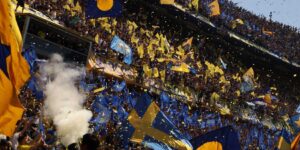
What AI said: “Passionate to the extreme; admired by many but strongly disliked by neutrals and rivals in South America.”
In Europe, Boca Juniors are arguably among the most popular teams, especially as so many dream of one day experiencing the carnival-esque atmosphere inside La Bombonera. The blue-and-yellow pocket of Buenos Aires is often seen as a tourist destination, but those who have to face them competitively are unlikely to view them through the same rose-tinted glasses.
With 18 CONMEBOL titles – including six Copa Libertadores – the Argentine giants have enjoyed immense success, so it is little surprise they are not particularly loved by their inferior rivals.
17. Paris Saint-Germain

What AI said: “The modern ‘superclub’ perception and clashes with other ultras have made them unpopular across Europe.”
PSG emerged in 1970 as a result of a project to bring a top-level football team back to Paris, officially merging with existing club Stade Saint-Germain to form the new entity. They remained a low-key force until 2011, when a new Qatari ownership started pumping a ridiculous amount of money into the club, which has now seen Les Parisiens win 10 of the last 12 Ligue 1 titles on offer.
Having also now won a Champions League, there is that lingering distaste about how the club went about their rise to prominence while so many others have to do it the hard way. That, coupled with the Ultras’ tendency to clash with other European fanbases, means they are lucky not to be higher on this list.
16. Atletico Madrid

What AI said: “A confrontational identity and intense rivalry with Real Madrid creates strong hostility.”
Atletico Madrid have been built in such a way by Diego Simeone that they are horrible to play against. The dark arts form the backbone of a team that is aggressive in its tackling and isn’t afraid to get involved in off-field conflicts when opponents try to give it back to them. At times, their football has been an eyesore, but it has also been very effective, and it is more likely the team itself that has become hated rather than the fans, though the confrontational culture can often seap into the stands.
15. Fenerbahce

What AI said: “One of the most intense fan cultures in Europe; widely disliked by rivals and many neutrals.”
While success in Europe has been limited in recent years due to the wealth gap with the continent’s elite, Fenerbahce remain one of Turkey’s superpowers. Incredibly, per Turkish news outlet N24, 32 per cent of all fans in the country support the yellow-navy blues, and that can be enough to create hate on its own.
But, in recent years, they have also earnt a riotous reputation following several pitch invasions that have turned ugly, with one example seeing police have to protect Galatasary players with tear gas, pepper spray, and riot shields.
14. Chelsea

What AI said: “The Roman Abramovich era success and historic hooligan reputation built a strong anti-Chelsea sentiment.”
As highlighted by AI, the hatred other fans have for Chelsea can be split into two sections. During the 1970s and 80s, the Headhunters – an infamous hooligan group – made football in London an unsafe environment. Those were during the Blues’ more humble days on the pitch, before Roman Abramovich’s ownership in the early-2000s saw the west Londoners become a huge club overnight, which came with it the arrogance and delusion at Stamford Bridge.
13. Inter Milan

What AI said: “The polarising nature of Italian football rivalries and strong ultras culture makes them divisive.”
In Milan – more specifically at the San Siro, one of the most iconic stadiums in world football – AC are often seen as the “good,” while Inter are cast as the “evil,” in a classic case of good cop, bad cop. The reasons aren’t entirely clear, but recent success is a likely factor, with Inter having been Italy’s best-performing team in the 21st century a cause of a lot of envy.
12. Juventus

What AI said: “Dominance in Italy plus the legacy of the Calciopoli scandal means they are disliked by many across the country.”
Take Inter’s success, add a heavy dose of controversy, and you get Juventus. During the 2004/05 and 2005/06 Serie A seasons, the Old Lady was at the centre of a scandal in which referee appointment manipulation helped them to back-to-back titles – honours that were later stripped, with Inter Milan awarded the second. Juventus were subsequently relegated to the second tier, though they have since made a full return to the top flight.
11. Tottenham

General view of Tottenham Hotspur Stadium
What AI said: “A club frequently mocked by rival fans due to perceived underachievement relative to ambition.”
This is a prime example of football fans loving to hate someone for the sake of it. While Tottenham fans themselves are level-headed, rivals have pushed a narrative that they think they are more successful than they really are. A history of slip-ups whenever trophies seem within touching distance has given neutrals plenty of opportunity to revel in their misfortune – even if those inside the futuristic new stadium don’t expect to see success themselves anytime soon either.
10. Manchester City

Carabao Cup – Quarter Final – Manchester City v Brentford – Etihad Stadium, Manchester, Britain – December 17, 2025 Manchester City manager Pep Guardiola celebrates after the match Action Images via Reuters/Jason Cairnduff
What AI said: “Rapid success after Abu Dhabi ownership has created resentment among rival supporters.”
Manchester City were spoon-fed success when Sheikh Mansour and his Abu Dhabi royalty bought the club in 2008, splashing the cash in a bid to transform their reputation from Manchester United’s noisy neighbours to genuine giants. Pep Guardiola joined in 2016 and was given seemingly unlimited funds to experiment his way to a squad capable of winning it all.
All of that success has gone straight to the City supporters’ heads, who believe their players and manager are the best in the world – despite an inability to consistently sell out their stadium and a 115-charge financial court case showing their dominance still feels somewhat superficial.
9. AC Milan
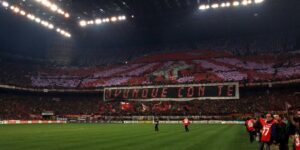
AC Milan stadium San Siro
What AI said: “Historic success and arrogance often attributed to the fanbase make them widely disliked in Italy.”
While the rest of Europe is in awe of AC Milan, whose faded star power brings a certain sense of romance – with the likes of Kaka, Paolo Maldini, and others being widely loved – those in Italy tend to envy them. With seven Champions League titles, they stand head and shoulders above the rest of the country in terms of continental success.
8. Newcastle United
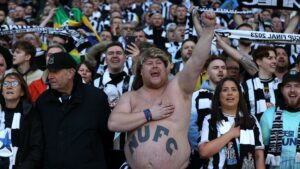
What AI said: “One of the most intense and emotionally driven fanbases in English football, known for unwavering loyalty but also fierce frustration when expectations aren’t met.”
At Newcastle United, passion isn’t just part of the culture — it is the culture. From the deafening roar inside St James’ Park to the relentless scrutiny players and managers face, the Toon Army demand everything… and then some.
Years of underachievement have left scars, and while the modern era has brought renewed hope, that edge hasn’t disappeared. When things go right, the city lifts the team to another level — but when they don’t, the backlash is immediate, loud, and impossible to ignore.
Whether it’s turning on performances, questioning decisions, or letting emotions spill over online and in the stands, Newcastle fans live every moment at full volume. Love them or hate them, one thing is certain… there’s no middle ground when it comes to the Toon.
7. Barcelona

What AI said: “Once globally loved, but dominance during the Pep era and fan arrogance accusations created backlash.”
Lionel Messi is one of the most loved footballers ever, as is his former teammate Andres Iniesta. During the peak of their tiki-taka powers, many in England sought to emulate Barcelona, and for those reasons, it would have been easy to view the Catalan giants in a positive light. But they soon became hated when everyone realised they didn’t just play beautiful football – they were unbeatable. Jealousy is the root of much ill will, and Pep Guardiola’s super team generated plenty of it, while politics that have manifested a siege mentality in northeastern Spain also haven’t helped.
6. Liverpool
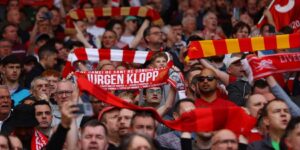
Liverpool fans
What AI said: “Massive global fanbase but often criticised by rivals for perceived victim mentality and online presence.”
Although English football faced problems across the board in the 70s and 80s, many rivals singled out Liverpool when English clubs were banned from European competition following the Heysel Stadium disaster in 1985. That moment quickly broke bridges between the Reds and the rest of the country, extending even into politics with the “Scouse, not English” mindset.
Even without that fiasco, the rest of England still has to look to the red half of Merseyside if they want to claim the title of the country’s most successful club, which is an obvious source of frustration too. Six Champions League trophies and 20 top-flight titles make Anfield a green-eyed monster for anyone chasing the gold standard.
5. Manchester United

What AI said: “Decades of dominance under Alex Ferguson created generations of rival fans who loved to hate them.”
While Liverpool might be more successful overall, Manchester United’s reign of terror under Sir Alex Ferguson came at a far worse time for rival supporters. From 1992 onwards, at the dawn of the digital era, the Red Devils dominated the spotlight, gaining more publicity for their glory and, in turn, becoming arguably the biggest football club in the world.
If success can breed jealousy, imagine what a massive fanbase – fully aware of every tip and trick to rile up rivals – could do to those who grew up watching United lift trophy after trophy, with their vocal supporters shouting it from the rooftops.
4. Celtic

Celtic and Rangers fans clash as police try to calm proceedings
What AI said: “The intense sectarian divide in Scottish football fuels strong hatred among rivals.”
Celtic fans often live in their own bubble. What they believe – both within football and beyond – is, in their eyes, absolutely not up for debate. When they encounter those outside Glasgow who don’t see things the same way, all hell can break loose. This intensity makes Celtic one of the biggest clubs in the world, with one of the most passionate fanbases, but that same passion can also create plenty of issues.
3. Rangers

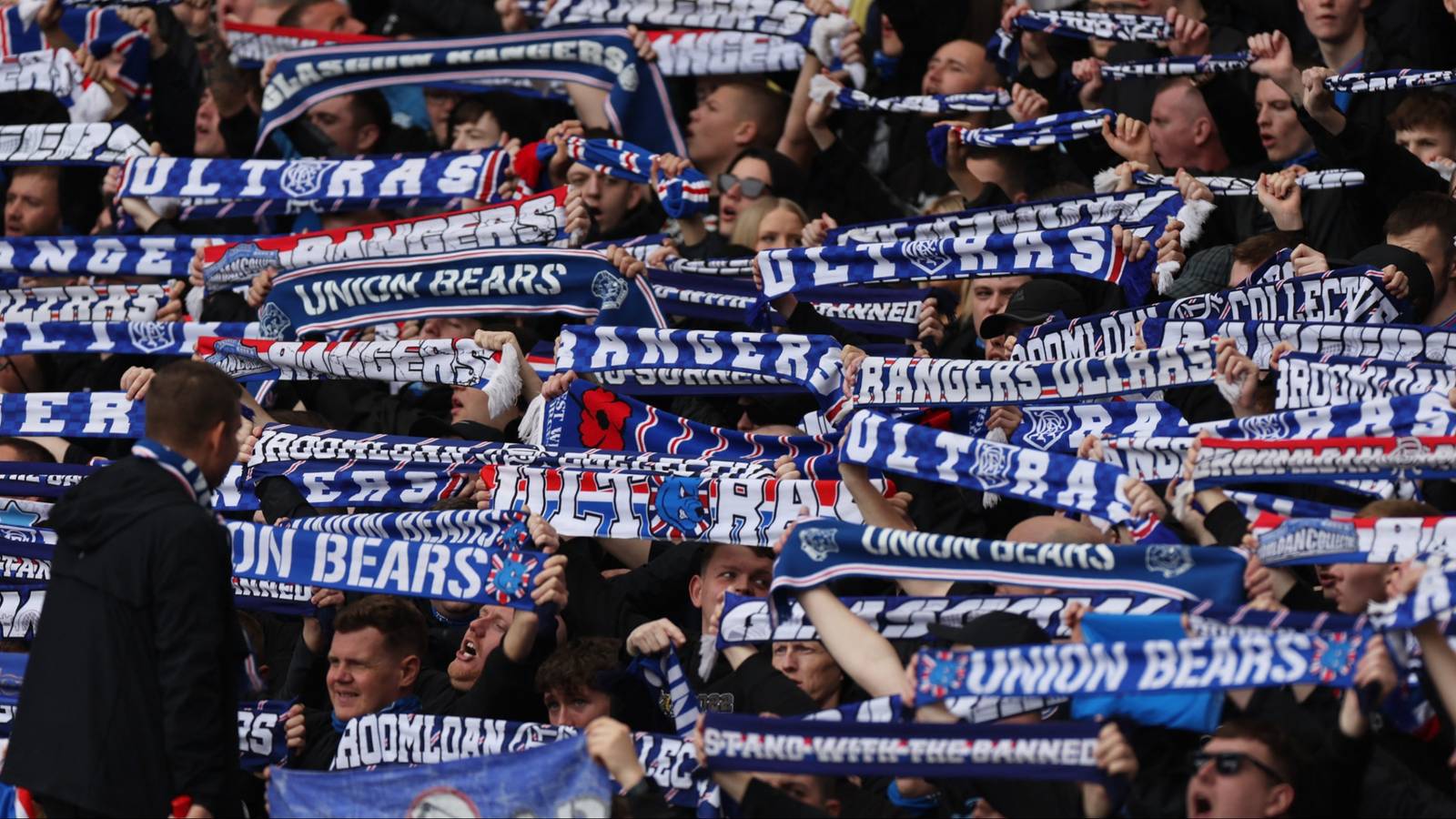
What AI said: “Similarly polarising due to historic political, religious, and cultural rivalries.”
What was said about Celtic can also be said about Rangers. However, in the case of their political and religious views, they are less popular, generally, with the rest of the world, and so they find themselves just ahead of Celtic as the most hated fanbase in British football.
2. Real Madrid

UEFA Champions League – Real Madrid v Olympique de Marseille – Santiago Bernabeu, Madrid, Spain – September 16, 2025 Real Madrid’s Kylian Mbappe celebrates scoring their second goal REUTERS/Juan Medina
What AI said: “Seen as the establishment club in Spain and widely resented for wealth, influence, and success.”
Real Madrid have won 15 Champions League titles in their history – eight more than AC Milan, nine more than Liverpool and Bayern Munich, and 10 more than Spanish rivals Barcelona. It will likely take at least a century for another club to match their dominance in European football, and that alone is enough to earn widespread hatred.
The fanbase doesn’t help, often coming across as snobby and unforgiving when their team isn’t playing perfect football and winning everything in sight, turning on widely-loved footballers like Gareth Bale at the first opportunity they get.
1. Lazio
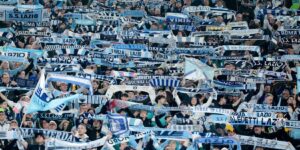
What AI said: “Often considered the most disliked fanbase globally due to repeated controversies involving extremist ultras groups and incidents that have damaged the club’s reputation internationally.”
For those not clued up on Lazio, it might come as a surprise that AI has ranked them as the most hated fanbase, given their relative lack of success compared to other clubs on the list. However, their history with right-wing extremism – particularly in the Curva Nord, where their ultras are based at Rome’s Stadio Olimpico – has seen them regularly embroiled in racist chanting and other controversies.
They also tend to believe they deserve better, frequently leaving the stadium empty through boycotts and protests. That combination of political activism and constant unrest has made them widely despised.