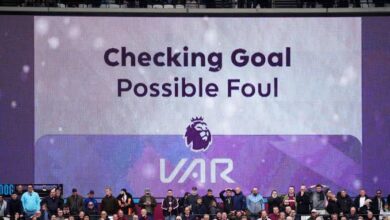
THE FREQUENCY AT WHICH THEY SANG THAT CHANT MADE US LOSE OUR MOMENTUM AND LOST THE TWO GOALS LEAD


Bournemouth were 2-0 up. Completely in control. Dictating every phase of the game. Then the noise started. Not ordinary noise. Not the usual St James’ Park roar that every visiting side expects. This was something different. Something calculated. Something that felt almost engineered to break concentration and destroy rhythm. The frequency at which the Newcastle fans sang that chant became so relentless, so perfectly timed, and so piercing that it literally made us lose our momentum… and with it, a two-goal lead that should have been unassailable.
From the ninth minute the match belonged to the Cherries. Marcus Tavernier reacted quickest to a deflected Alex Scott effort and poked the ball home. The away end erupted. Newcastle’s home supporters, already frustrated by early decisions, began to grow restless. Then came the second goal in the 35th minute – the kind of slapstick moment that can kill a team’s spirit. Justin Kluivert’s strike crashed off the post, bounced off goalkeeper Lukas Horníček, and somehow ended up in the net via Malick Thiaw’s outstretched boot. Own goal. 2-0. Game over, or so it seemed.
Bournemouth were dominant. More shots, higher expected goals, better movement, clearer structure. Marco Rose’s side looked organised, aggressive, and clinical. Newcastle, under new manager Matthias Jaissle, looked shell-shocked. The home crowd’s early discontent was palpable. Boos had already started after the first goal when they felt a foul on Anthony Elanga had been ignored. The atmosphere was turning toxic for the hosts. That should have been the moment the Cherries killed the contest.
Instead, something strange began to happen.
Harvey Barnes pulled one back almost immediately with a trademark curling strike from the left. A brilliant goal, no question. But it was not the quality of the finish that changed the game. It was what followed. The Newcastle fans found their voice. One specific chant began to roll around the ground. It started in one corner, then another, then the whole stadium seemed to lock into the same rhythm. The frequency was extraordinary. Not just loud. Not just continuous. It was repetitive to the point of psychological warfare. Every time Bournemouth tried to settle on the ball, the chant hit a new peak. Every time a Newcastle player recovered possession, the volume spiked again. The timing felt deliberate. The intensity never dropped.
Players later described it as disorientating. Communication on the pitch became almost impossible. Shouts from the technical area were swallowed. Instructions from teammates were lost in the wall of sound. The constant, high-frequency repetition of that one chant created a kind of mental white noise. Momentum, that fragile and invisible force that decides so many matches, simply drained away. What had been a controlled, confident Bournemouth performance began to fray at the edges.
The second half brought more of the same. Newcastle improved, but not dramatically. Bournemouth still created the better openings. Yet every time the Cherries looked ready to push for a third goal or simply manage the game, the chant returned with renewed force. It was as if the home supporters had identified the exact frequency that could disrupt concentration. The longer it continued, the more the visiting players’ body language changed. Shoulders dropped slightly. Decision-making slowed. The crisp passing that had characterised the first half became more hurried and less precise.
By the time the 88th minute arrived, the damage was done. A high ball into the box, a header across goal, a blocked shot, and suddenly the ball broke kindly for substitute Jacob Ramsey. He side-footed it home with composure. 2-2. The stadium exploded. The same chant that had been grinding away at Bournemouth’s focus for most of the afternoon now became a roar of triumph. Six minutes of stoppage time followed, but the Cherries never looked likely to regain the lead. The momentum had been stolen, not by superior football, but by the relentless frequency of that chant.
This is not an excuse. Bournemouth will look at their own failure to close the game out. They will examine why a side that dominated for long periods could not protect a two-goal advantage. They will ask hard questions about game management and concentration in the final stages – especially given this is now the third consecutive Premier League match in which they have conceded late. But to ignore the role of the atmosphere would be dishonest. Modern football is as much a psychological contest as a physical one. When a home crowd finds a chant and locks into a frequency that never lets up, it can become a genuine competitive factor.
Some will laugh this off. They will say “welcome to the Premier League” or “if you can’t handle the noise, don’t play away from home.” That is too simplistic. There is a difference between passionate support and a sustained, almost hypnotic repetition that appears designed to break focus. The Newcastle fans were magnificent in their intensity. No one can deny that. But the effect on the visiting team was measurable in the way the performance unravelled. From a position of total control at 2-0, Bournemouth ended the match scrambling for a point and reflecting on another late collapse.
Marco Rose will not publicly blame the crowd. Managers rarely do. He will talk about standards, about concentration, about the need to be more clinical. Behind closed doors, however, the players will discuss what it felt like when that chant refused to stop. They will talk about how the noise seemed to arrive at the exact moments when composure was most needed. They will admit that the frequency of the singing made clear thinking harder.
For Bournemouth supporters, the frustration is understandable. Another lead surrendered. Another late goal conceded. Another opportunity for a first win under the new manager allowed to slip away. The team created enough chances and controlled enough of the contest to have won. Instead they left St James’ Park with a single point and the knowledge that the atmosphere had played a decisive role in shifting the momentum.
Football has always been emotional. Crowds have always influenced matches. But there are moments when the volume and the frequency of the noise cross a threshold and become something more. On this afternoon at St James’ Park, that threshold was crossed. The chant never stopped. The frequency never dropped. And a two-goal lead that should have been safe was lost in the process.
Bournemouth deserved better. The players deserved better. The result may show 2-2, but the story of the match is written in the stands as much as on the pitch. The frequency at which they sang that chant did not just entertain the home supporters. It dismantled the visiting team’s rhythm, drained their momentum, and ultimately cost them two points. In the modern game, that is a factor that can no longer be dismissed.