
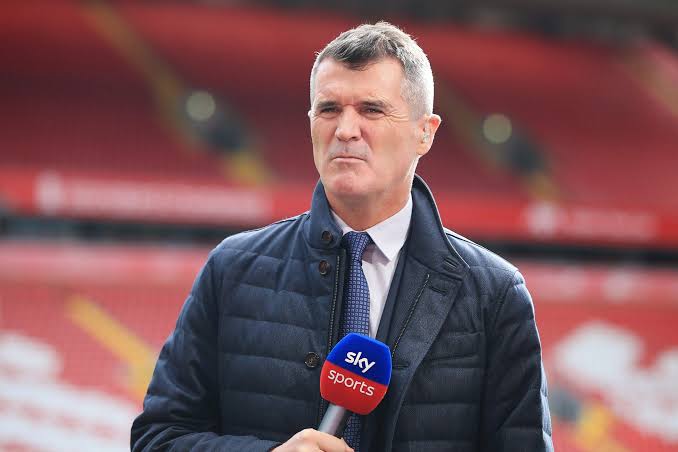
West Ham United delivered a statement performance against Everton, and it did not go unnoticed by outspoken pundit Roy Keane, who praised one standout display while sharply criticizing an underwhelming opponent.
At the heart of Keane’s admiration was Tomáš Souček, whose commanding performance epitomized West Ham’s dominance.

The Czech midfielder, known for his physicality and eye for goal, produced what Keane described as a “complete midfield masterclass.” Souček’s influence was evident from the opening whistle, as he dictated the tempo, broke up Everton’s attacking rhythm, and consistently drove his side forward with purpose.
Keane particularly highlighted Souček’s pressing intensity and positional awareness, noting how crucial he was in West Ham’s tactical execution. “That’s what you expect from a top-level midfielder,” Keane said. “He’s disciplined, aggressive when needed, and always in the right place at the right time. He set the standard for everyone else on the pitch.”
West Ham’s cohesive pressing game proved too much for Everton to handle, with Souček acting as the engine in midfield. His ability to win second balls and quickly transition play turned defense into attack seamlessly, putting Everton under constant pressure. It was this relentless energy and tactical intelligence that allowed West Ham United to maintain control and ultimately secure a convincing result.
While Keane was full of praise for Souček, his tone shifted dramatically when assessing Everton’s performance—particularly that of forward Thierno Barry. In a brutally honest critique, Keane labeled Barry’s display as ineffective and lacking the intensity required at the highest level.

“I don’t know what he was doing out there,” Keane remarked. “No presence, no urgency, no threat. If you’re playing up front, you have to at least occupy defenders and give your team something to work with. He didn’t do that.”
Keane’s criticism of Barry underscored a broader issue within Everton’s performance—an apparent lack of cohesion and cutting edge. The forward’s inability to hold up play, create chances, or press effectively left Everton isolated and struggling to build any meaningful momentum.
The contrast between the two players was stark. While Souček was proactive, decisive, and influential, Barry appeared disconnected and ineffective. Keane emphasized that such disparities often define matches at this level, where individual performances can significantly impact team outcomes.
For West Ham, the victory reinforces their growing reputation as a disciplined and well-drilled side capable of executing a clear tactical plan. Souček’s performance serves as a benchmark for consistency and commitment, qualities that will be crucial as the season progresses.
For Everton, however, the defeat raises serious concerns. Keane’s pointed remarks reflect the urgency for improvement, particularly among key players expected to deliver in high-pressure situations.
As always, Keane’s analysis was unapologetically direct—celebrating excellence while calling out mediocrity. In this case, it was a tale of two performances: one that embodied control and authority, and another that fell far short of expectations.