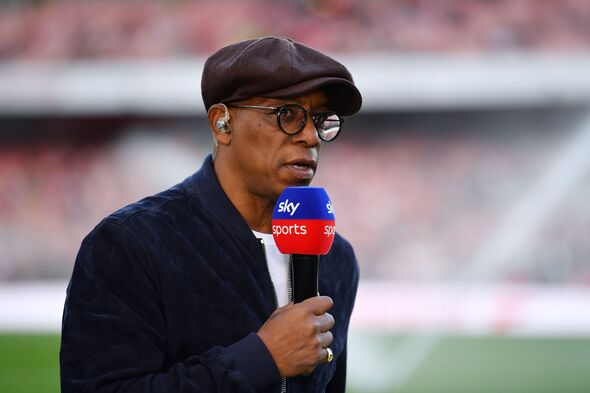
Ian Wright delivered a passionate and authoritative response to Jamie Carragher’s recent criticism of Crystal Palace, igniting widespread reaction across the football community and earning admiration from fans and pundits alike.
The debate began when Carragher suggested that Crystal Palace had been “overhyped” in one particular aspect of their Premier League performances this season. While the former Liverpool defender did not dismiss the club entirely, his remarks implied that the growing praise surrounding the Eagles may have been exaggerated, especially when measured against consistency and tangible results. His comments quickly gained traction, sparking discussion among supporters and analysts.
However, it was Ian Wright’s response that truly shifted the narrative.
Speaking with conviction, the Arsenal legend and former Crystal Palace striker firmly rejected Carragher’s assessment. Wright, known for his deep connection to Palace, did not hold back as he dismantled the argument with a blend of factual analysis and emotional clarity. He highlighted the club’s progression, pointing to their tactical discipline, emerging talents, and resilience against stronger opposition as evidence that their recognition is well deserved—not inflated.
Wright emphasized that Crystal Palace’s development should be viewed within proper context. Rather than comparing them directly to traditional “big six” clubs, he argued that Palace’s growth lies in their structure, identity, and ability to compete effectively despite financial and squad limitations. According to Wright, labeling such progress as “overhyped” overlooks the realities of modern football and diminishes the achievements of clubs operating outside the elite tier.
His response resonated strongly with fans, particularly those of Crystal Palace, who flooded social media with praise. Many described Wright’s rebuttal as a “masterclass,” applauding both his loyalty and his ability to articulate what they felt had been ignored. Supporters appreciated that he not only defended the club but also reframed the discussion in a more balanced and informed way.
The reaction was overwhelmingly positive. Fans commended Wright for “standing up for the Eagles,” with some even suggesting that his intervention exposed a bias in how smaller clubs are often evaluated. Others noted that his perspective brought necessary nuance to a conversation that had become overly simplistic.
Beyond fan reactions, Wright’s response also underscored a broader issue within football discourse: how success is defined. For clubs like Crystal Palace, progress is not always measured in trophies or top-four finishes, but in stability, player development, and competitive performances. Wright’s argument reinforced the idea that such achievements deserve recognition without being dismissed as hype.
In contrast, Carragher’s original comments, while rooted in analysis, now appear to have underestimated the emotional and contextual dimensions of Palace’s journey. Wright’s intervention effectively rebalanced the discussion, reminding audiences that football narratives are not solely built on statistics but also on understanding a club’s unique trajectory.
Ultimately, this exchange has become one of the standout pundit moments of the season. Ian Wright’s composed yet forceful defense of Crystal Palace not only won over fans but also reaffirmed his reputation as a voice of authenticity in football analysis.