Football fans are not demanding perfection. They are demanding fairness, transparency and consistency.

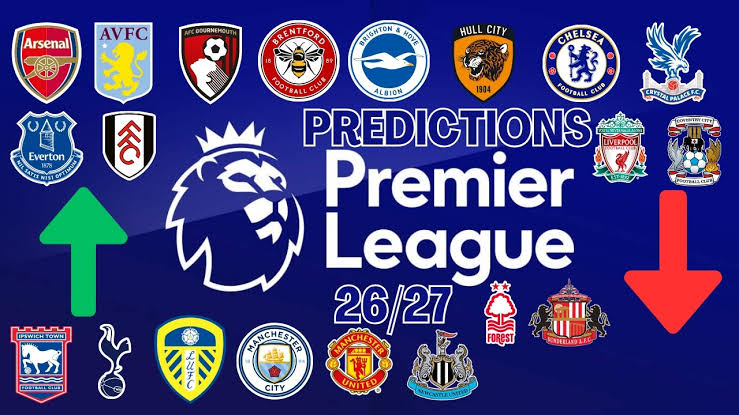
“NEWCASTLE, EVERTON, SUNDERLAND, NOTTINGHAM FOREST AND ASTON VILLA DESERVE ANSWERS!” Premier League Refereeing Controversies Renew Calls for Consistency and Transparency
The Premier League continues to deliver thrilling football, dramatic finishes and unforgettable moments, but controversial refereeing decisions remain a major talking point among supporters. From penalty appeals and handball incidents to offside interpretations and the use of Video Assistant Referee (VAR), questions about consistency have continued to place pressure on the league and the Professional Game Match Officials Limited (PGMOL).
For Newcastle United, Everton, Sunderland, Nottingham Forest and Aston Villa, the wider debate raises an important question: are the rules being applied consistently enough for every club to have confidence in the officiating system?
Football supporters understand that referees must make difficult decisions in real time. However, when a decision has the potential to change the outcome of a match, the demand for a clear explanation becomes even greater. Clubs invest heavily in their squads, players work tirelessly to secure results, and supporters devote their emotions to every match. It is therefore understandable that contentious decisions can generate frustration when the reasoning behind them is unclear.
Newcastle United and the Debate Over Penalty Decisions
Newcastle United have been involved in several high-profile refereeing discussions, demonstrating how quickly penalty decisions can become a major talking point.
In September 2026, Newcastle were awarded a penalty against Hull City after Jacob Murphy went down following a challenge involving Sorba Thomas. VAR reviewed the incident and supported the on-field decision, with officials explaining that contact with Murphy’s foot had an impact. The decision nevertheless generated debate about the threshold for awarding penalties. <Cite refs={[“turn605480search5”]}/>
This incident highlights an important distinction. The issue is not simply whether Newcastle should receive a penalty in every disputed situation, but whether similar incidents involving other clubs are judged according to the same principles.
Supporters want to understand why one challenge is considered sufficient for a penalty while another apparently comparable incident is allowed to continue. Without clear explanations, even decisions made in accordance with the rules can leave fans questioning the consistency of the process.
Newcastle deserve the same clarity as every other Premier League club, particularly when a controversial decision influences the momentum of a match.
Everton and the Frustration Surrounding VAR
Everton have also experienced decisions that have sparked discussion about the interpretation of the laws of the game.
During their October 2026 match against Hull City, Everton appeared to have scored through Brennan Johnson after the goalkeeper spilled an effort and the loose ball was converted. However, VAR overturned the original goal decision because Johnson was judged to be in an offside position and interfering with an opponent. The Premier League Match Centre explained the reasoning behind the intervention. <Cite refs={[“turn605480search0”]}/>
The incident illustrates why offside decisions involving interference can be controversial. A player may not touch the ball or physically collide with the goalkeeper, yet officials may still determine that the player has affected an opponent’s ability to play it.
The question for supporters is whether the same interpretation is applied consistently across the competition. When goals are disallowed, fans want to understand precisely what constitutes interference and why a particular player’s position affects the outcome.
Everton’s situation demonstrates that transparency is essential. Explaining a decision is important, but ensuring that comparable incidents are assessed consistently is equally necessary.
Sunderland and the Importance of Consistent Penalty Standards
Sunderland’s return to the Premier League has added another dimension to discussions about refereeing standards. As the club competes against established sides, its supporters have every reason to expect the same application of the laws that governs every other team.
Penalty decisions are particularly sensitive because they can change the direction of a match within seconds. A referee must determine whether contact constitutes a foul, whether a defender’s actions are punishable and whether VAR has sufficient grounds to intervene.
In September 2026, Sunderland were awarded a penalty against Arsenal for a holding offence involving Wilson Isidor. The Premier League’s explanation stated that the defender was not looking at the ball and had put his arms around Isidor, preventing him from moving inside. VAR checked and confirmed the on-field decision. <Cite refs={[“turn605480search6”]}/>
This provides a useful example of the kind of explanation supporters need. When a penalty is awarded, the reasoning should be clear enough for fans to understand the decision. The same principle should apply when an appeal is rejected.
Sunderland should not receive favourable treatment because they are a newly promoted side, nor should they be disadvantaged because they lack the influence or history of some established clubs. The standard must be identical for everyone.
Nottingham Forest and the Long-Running VAR Debate
Nottingham Forest have previously been at the centre of one of the Premier League’s most prominent refereeing controversies.
During their April 2024 defeat to Everton, Forest complained about three penalty appeals that were not awarded. The club publicly criticised the decisions and requested the release of VAR audio, arguing that the incidents had significantly affected their match. The controversy subsequently became a wider debate about officiating accountability and communication between clubs and PGMOL. <Cite refs={[“turn605480news12″,”turn605480search8”]}/>
That episode demonstrated how quickly frustration can escalate when clubs believe important decisions have gone against them.
It also highlighted the importance of maintaining a distinction between disagreement with an official’s decision and allegations of deliberate bias. A controversial decision does not, by itself, prove that a referee acted dishonestly. Nevertheless, clubs must have a credible way to raise concerns and receive meaningful answers.
Forest’s experience reinforces the need for clear review procedures, transparent explanations and confidence that officials are being assessed fairly.
If a penalty appeal is rejected, supporters should be able to understand why the contact did not meet the threshold for a foul. If VAR decides not to intervene, the reasons should be explained in straightforward language.
Aston Villa and the Need for One Standard
Aston Villa also deserve to be part of the wider conversation about consistency in Premier League officiating. Like every club, Villa can benefit from decisions in one match and feel frustrated by decisions in another.
The central issue is not whether every disputed incident should automatically result in a penalty. Football’s laws require officials to consider the nature of the contact, the circumstances surrounding an incident and whether the relevant threshold for an offence has been met.
However, supporters are entitled to ask why apparently similar situations sometimes produce different outcomes.
The Premier League must ensure that the distinction between a clear error and a decision involving legitimate interpretation is communicated effectively. VAR is designed to correct clear and obvious mistakes, not to reopen every subjective decision simply because another interpretation is possible.
That distinction is essential. Excessive intervention can undermine the referee’s authority, while insufficient intervention can leave serious mistakes uncorrected.
Villa, Newcastle, Everton, Sunderland and Forest should all be judged under the same framework, regardless of their league position, reputation or the importance of an individual fixture.
What Must the Premier League and PGMOL Do Next?
The Premier League and PGMOL have taken steps towards greater transparency, including publishing explanations of VAR interventions and assessments of key match incidents. These initiatives provide supporters with more information about how decisions are reached. <Cite refs={[“turn605480search0″,”turn605480search1”]}/>
However, there is still a strong case for making explanations more accessible, consistent and informative.
First, controversial decisions should be explained promptly, particularly when they directly affect a goal, penalty or sending-off. Second, officials should communicate the relevant law and explain why the incident meets, or fails to meet, the required threshold. Third, comparable incidents should be assessed consistently, with mistakes acknowledged when independent reviews establish that an error occurred.
Most importantly, accountability must apply across the entire competition. No club should have to fight harder than another to obtain an explanation.
Conclusion: Every Club Deserves Fair Treatment
Newcastle United, Everton, Sunderland, Nottingham Forest and Aston Villa represent different histories, ambitions and expectations, but they share one fundamental interest: competing in a league where the rules are applied fairly.
Controversial decisions will always be part of football. Not every disagreement can be eliminated, and not every close call will produce universal agreement. What matters is whether supporters can trust the process used to reach those decisions.
The Premier League and PGMOL must continue working towards greater consistency, clearer communication and meaningful accountability. When a decision is correct, the explanation should demonstrate why. When an error occurs, it should be acknowledged and lessons should be learned.
Football fans are not demanding perfection. They are demanding fairness, transparency and consistency.
If the Premier League wants supporters to trust the system, every club must receive the same standard of officiating and the same level of accountability. Newcastle, Everton, Sunderland, Nottingham Forest and Aston Villa deserve nothing less—and neither does any other club competing in English football’s top flight.