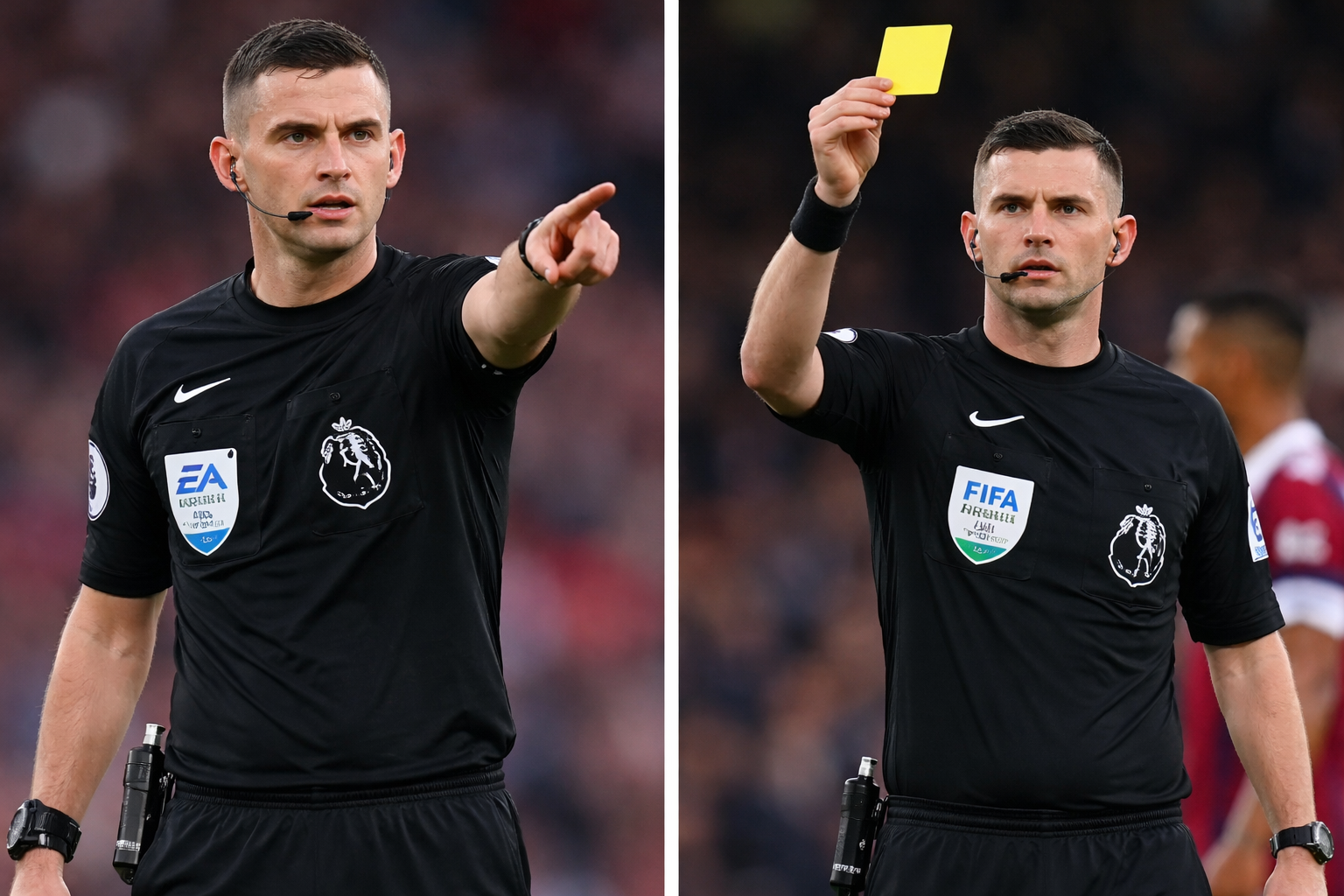
Under the bright lights and rising tension of the Premier League stage, the clash between Crystal Palace and West Ham United delivered drama, controversy, and moments that left fans on the edge of their seats—even if the final scoreline read a frustrating 0–0.
At first glance, a goalless draw might suggest a dull encounter. But this was anything but ordinary. Beneath the surface, the match was packed with intensity, tactical battles, and a defining moment that could have changed everything.
The biggest talking point came late in the game when Ismaïla Sarr thought he had snatched a dramatic winner for Crystal Palace. The stadium erupted, players celebrated, and for a brief moment, it seemed like the deadlock had finally been broken. However, that joy was short-lived. After careful review, the goal was ruled out for handball in the buildup—an agonizing decision that instantly shifted the emotional tide.
At the center of it all stood referee Michael Oliver, one of the Premier League’s most experienced officials. His call, backed by VAR, proved decisive. In matches of such fine margins, decisions like these often define the narrative—and this one will undoubtedly be debated long after the final whistle.
Interestingly, while Palace were left heartbroken by the disallowed goal, West Ham had no such controversy attached to their attacking efforts. Contrary to any speculation, the Hammers did not have a goal ruled out during the match. Instead, they struggled to carve out clear-cut chances, facing a well-organized Palace defense that refused to buckle under pressure.
From a tactical standpoint, both teams displayed discipline but lacked that clinical edge in the final third. West Ham attempted to control possession and dictate tempo, but their attacking movements often broke down at crucial moments. Crystal Palace, on the other hand, looked dangerous on the counter and came closest to securing victory—if not for that heartbreaking VAR intervention.
The match ultimately became a story of “what could have been.” For Palace, it was a night where inches and decisions denied them a memorable win. For West Ham, it was a missed opportunity to capitalize on a game where their opponents had moments of vulnerability.
Beyond the scoreline, this encounter highlighted the growing influence of VAR in modern football. Moments like Sarr’s disallowed goal underscore how technology continues to shape outcomes, ensuring accuracy but sometimes at the cost of raw, unfiltered emotion. Fans celebrated, only to be silenced seconds later—a reminder of how quickly fortunes can change in today’s game.
As both teams walk away with a point, the lingering feeling is one of unfinished business. Matches like these often serve as turning points in a season—not because of the result, but because of the lessons learned. For Crystal Palace, it’s about maintaining belief despite cruel setbacks. For West Ham, it’s about finding sharper attacking solutions in tightly contested games.
In the end, this was more than just a goalless draw. It was a night of tension, controversy, and razor-thin margins—a match where one disallowed goal told the entire story.