
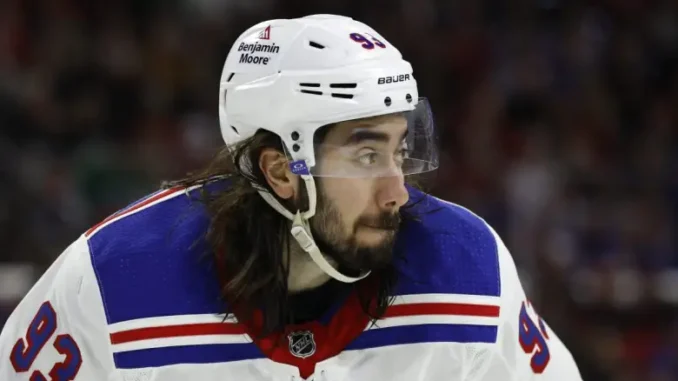

Red Wings Land Mika Zibanejad in Blockbuster Trade with Rangers
In one of the most surprising moves of the NHL offseason, the Detroit Red Wings have made headlines by acquiring New York Rangers star center and right winger, Mika Zibanejad. In a monumental trade that has fans and analysts alike buzzing, the Red Wings’ general manager, Steve Yzerman, has successfully completed a deal that brings the Rangers’ coveted eight-year, $110.5 million contract holder to Detroit. Zibanejad’s trade marks a pivotal moment in the Red Wings’ ongoing rebuild and solidifies the franchise’s commitment to becoming a perennial Stanley Cup contender in the near future.
The Trade Details
The trade between the Detroit Red Wings and the New York Rangers was finalized late last night, with both teams agreeing to a blockbuster deal that shook the hockey world. The specifics of the trade saw the Red Wings acquiring Mika Zibanejad, who has been a key player for the Rangers for several years, in exchange for a combination of draft picks and prospects, including a first-round pick, top-tier forward prospect Joe Veleno, and a young defenseman, Moritz Seider. This trade, while risky, addresses both teams’ needs—Detroit looking for immediate offensive help, and New York aiming to clear cap space and invest in a younger, more flexible roster.
Mika Zibanejad’s eight-year contract extension, which he signed with the Rangers in 2021, runs through the 2029-2030 season, with a cap hit of $13.8 million per year. The deal makes Zibanejad one of the highest-paid players in the league, but it is clear that Yzerman sees him as an essential piece for the Red Wings’ long-term goals. This bold move by Yzerman also signals that Detroit is ready to compete now, aiming to fast-track their rebuilding process and accelerate the development of their young talent.
For the Rangers, the trade is a calculated step toward retooling their roster, especially considering the team’s salary cap situation. By offloading Zibanejad’s significant contract, the Rangers free up valuable cap space, which they plan to use to pursue other key acquisitions this offseason. It also opens up opportunities for younger players like Filip Chytil and Kaapo Kakko to step into more prominent roles.
Why the Red Wings Made the Move
The Detroit Red Wings have been in the midst of a rebuild for several years now. Under the leadership of general manager Steve Yzerman, the team has focused heavily on developing young talent, but Yzerman has also been a proactive figure in the trade market. This move, however, is a clear indication that the Red Wings are looking to make a push for contention sooner rather than later.
Mika Zibanejad is exactly the type of player the Red Wings have been lacking in recent years—a proven, elite talent who can contribute offensively while also providing leadership and experience. In a league where teams are increasingly focused on building with young stars, the acquisition of a veteran like Zibanejad is a bold statement about the direction of Detroit’s future.
Since joining the Rangers in 2016, Zibanejad has become one of the most dynamic players in the NHL. Known for his powerful shot, impressive playmaking ability, and consistency in the faceoff circle, Zibanejad is a two-way force who can impact games in multiple ways. In the 2022-2023 season, he posted 37 goals and 46 assists, proving that he is still at the peak of his powers.
With the Red Wings struggling to find consistent offensive production over the past few seasons, adding a player like Zibanejad immediately addresses a key weakness. Detroit’s top line has often been led by Dylan Larkin, but with Larkin still developing as a leader and scoring threat, the addition of Zibanejad provides a true veteran presence who can take pressure off Larkin and further elevate the Red Wings’ offensive game.
Zibanejad’s Impact on the Red Wings’ Lineup
Mika Zibanejad’s arrival in Detroit brings with it a much-needed boost to the Red Wings’ forward group. The 30-year-old center/right winger is expected to immediately slot into the top-six forwards and possibly even anchor the second line, depending on how head coach Derek Lalonde chooses to configure the lineup.
Zibanejad’s versatility is one of his most valuable assets. Not only can he play both center and right wing, but he is also capable of excelling in both offensive and defensive situations. He has developed a reputation as a two-way forward, capable of both contributing on the power play and shutting down opposing teams’ top players. His ability to contribute in all situations, including the penalty kill and overtime, will be invaluable to the Red Wings.
In terms of offensive production, Zibanejad is expected to complement Detroit’s young star Lucas Raymond. Raymond, who is only entering his third season in the NHL, has shown flashes of brilliance, and playing with a player of Zibanejad’s caliber could accelerate his development. Likewise, the Red Wings’ captain Dylan Larkin could also see a boost in his production, as Zibanejad’s presence opens up more space for Larkin and the other Detroit forwards.
The Red Wings’ power play, which has struggled at times in recent years, is also expected to benefit from Zibanejad’s elite shot and playmaking. His booming slap shot from the point or high in the zone could be a game-changer for Detroit, especially on the man advantage. Additionally, his ability to win faceoffs will be crucial, particularly in late-game situations where puck possession is key.
Mika Zibanejad: A Player in His Prime
At 30 years old, Mika Zibanejad is entering the prime years of his career. Over the past few seasons, he has been consistently among the league’s top centers and right wingers. His production has remained steady, with Zibanejad eclipsing the 70-point mark in each of the last two seasons.
A major strength of Zibanejad’s game is his ability to generate offense from all areas of the ice. His wrist shot and slap shot are among the best in the league, making him a dangerous player on the power play. In addition to his shooting ability, Zibanejad is a tremendous playmaker, able to set up his teammates for high-quality chances. His hockey IQ is second to none, and his ability to read plays and anticipate offensive opportunities makes him one of the most difficult players to defend against.
Zibanejad’s leadership is another key factor in his value. He has long been a central figure in the Rangers’ locker room and is known for his work ethic and professionalism. Bringing in a player with Zibanejad’s experience will provide the Red Wings with a strong voice in the dressing room as they look to take the next step in their development.
What This Means for the New York Rangers
While this trade has left many fans in Detroit excited, it has also left a big question mark over the future of the New York Rangers. Losing Zibanejad, one of their most dynamic and consistent performers over the years, is a tough pill to swallow. However, the Rangers have shown time and again that they are a team focused on building for the future, and they will look to use the cap space created by this trade to add more pieces to their roster.
With Artemi Panarin, Chris Kreider, and Adam Fox still on the roster, the Rangers remain a competitive team in the Eastern Conference. The addition of youth and flexibility in their lineup should make them even more dangerous in the years to come. Look for the Rangers to be active in free agency and the trade market, targeting top-tier forwards and defensemen to complement their existing core.
In the short term, the Rangers will need to address the hole left by Zibanejad’s departure. It will be interesting to see how Filip Chytil and Kaapo Kakko step into bigger roles, as both have shown flashes of brilliance but have yet to fully establish themselves as top-line players. With the additional cap space, expect the Rangers to make a few key acquisitions this offseason to keep them in contention for the Stanley Cup.
The Detroit Red Wings’ trade for Mika Zibanejad represents a bold step forward in their quest for success. With the addition of a proven star like Zibanejad, the Red Wings are signaling their readiness to contend sooner rather than later. His skill set, leadership, and offensive prowess will undoubtedly make an immediate impact on the team, and the Red Wings’ future looks brighter than ever.
For the Rangers, the trade marks the beginning of a new chapter. By clearing cap space and bringing in young prospects, they have the flexibility to retool their roster and focus on long-term success. While it’s always tough to part with a star player, the Rangers are making the necessary moves to stay competitive in a rapidly evolving league.
As the NHL offseason unfolds, all eyes will be on the Detroit Red Wings and the New York Rangers to see how these teams move forward with their respective plans. For now, the Red Wings can celebrate a trade that brings them closer to their goal of returning to prominence in the NHL, while the Rangers prepare to continue their pursuit of the Stanley Cup with a fresh and restructured roster.